What it does, in the order a change control moves.
The Quality Bridge follows a change control or a deviation from the moment a contract manufacturer raises it to the moment the last party has decided and the quality event is concluded. This page walks through that, using the screens as they are.
The roles
CMO
Raises the change or the deviation, answers questions, records investigation steps and confirms implementation.
Intermediary
You set up the company profiles, users and product entitlements, and you watch for whatever has stalled. On business-to-business change controls and on deviations, you review and approve in your own right.
MAH
Acknowledges receipt, asks questions, and approves or rejects a change control. On a deviation, accepts the investigation and rules on the batch.
EU release site
Sees the change controls and deviations affecting the products it releases, and confirms it has read each one.
A change control, start to finish.
Create from your own export
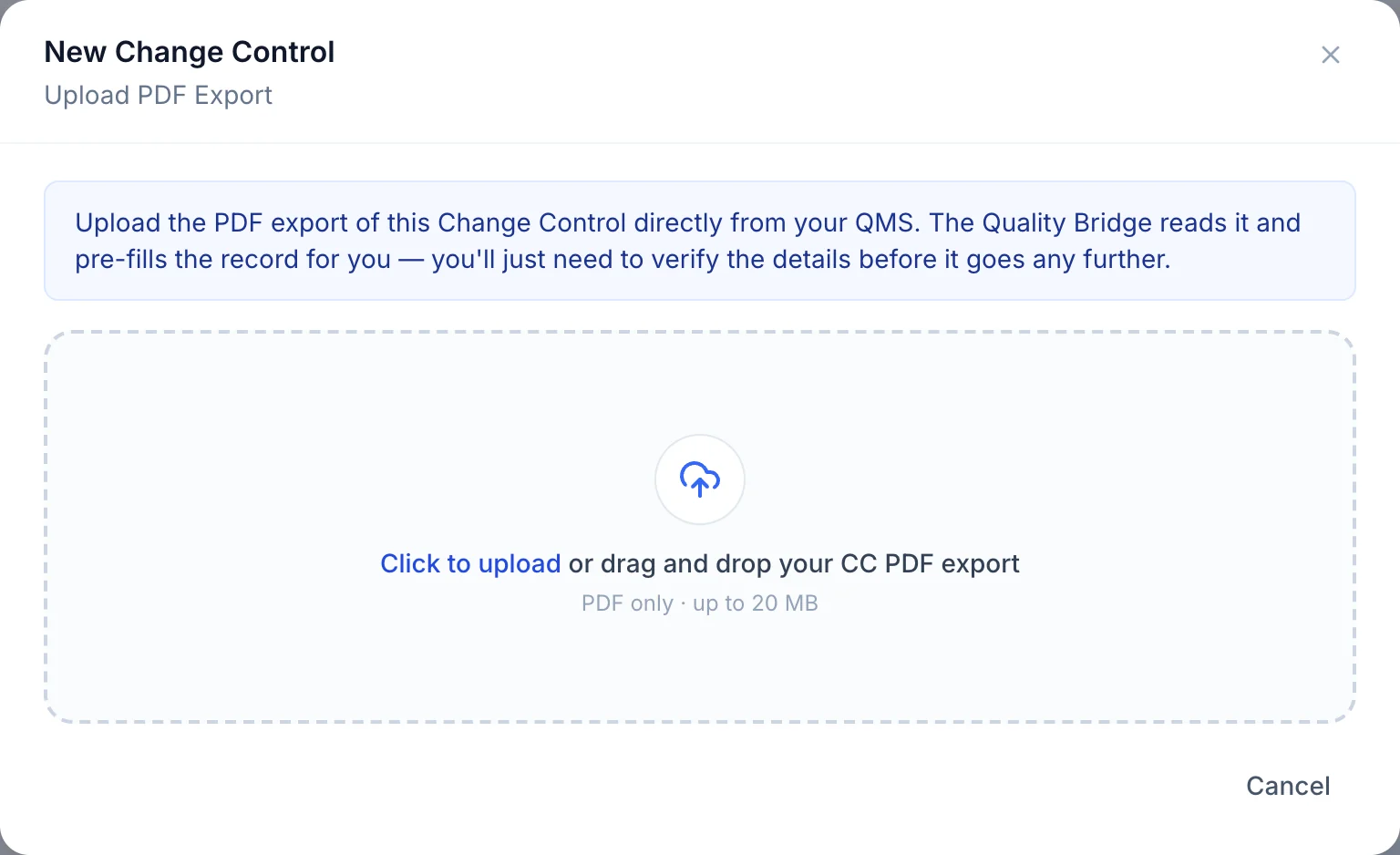
The CMO uploads the change control export from its own QMS. The CC reference number remains as-is for easy tracking.
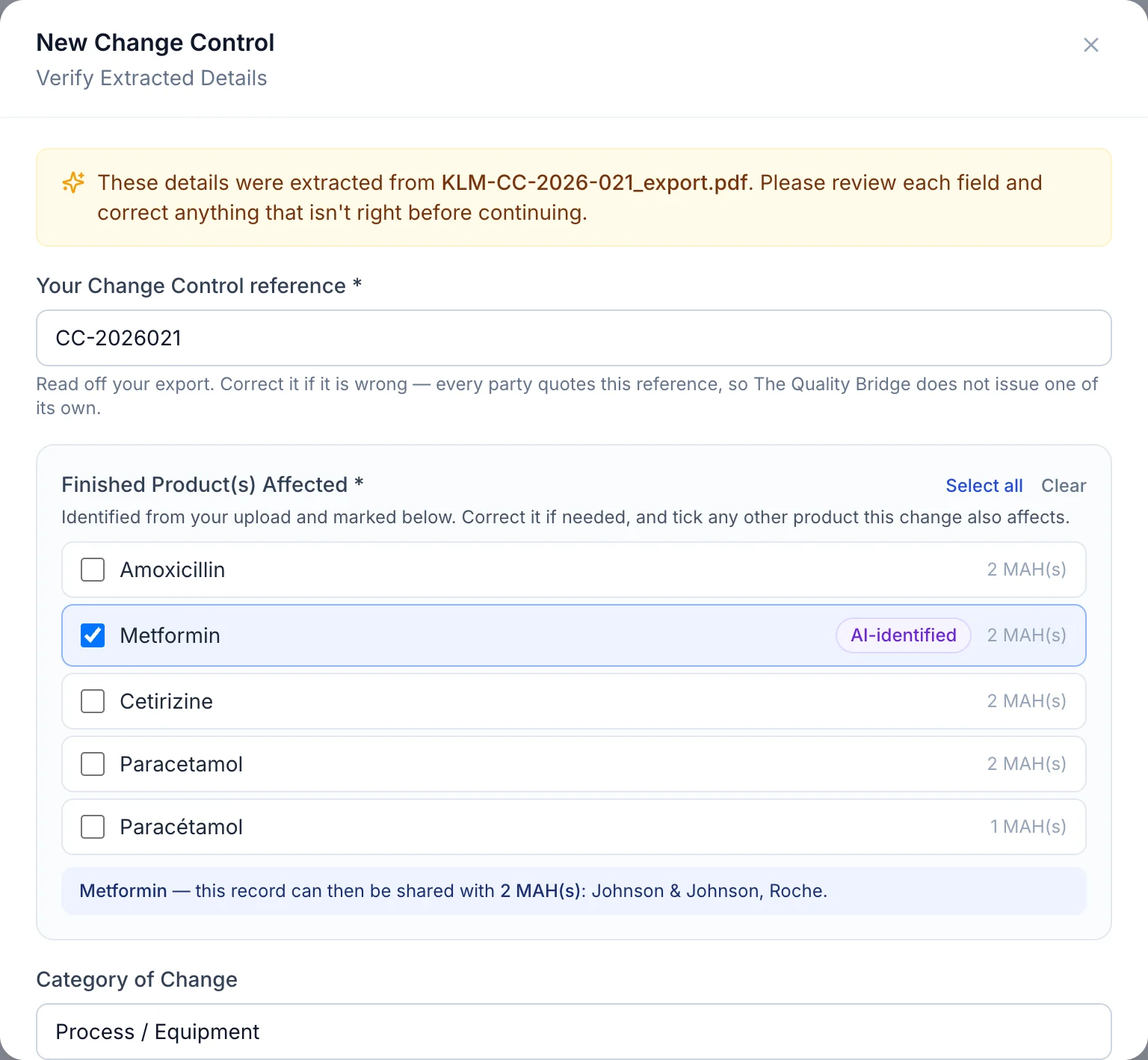
Fields extracted, every one verified
The platform reads the key fields off the export: the change, the regulatory impact, the variation type, the action plan and it identifies the affected products. The CMO confirms or corrects each field. Nothing is blocked and nothing moves until a person has checked it.
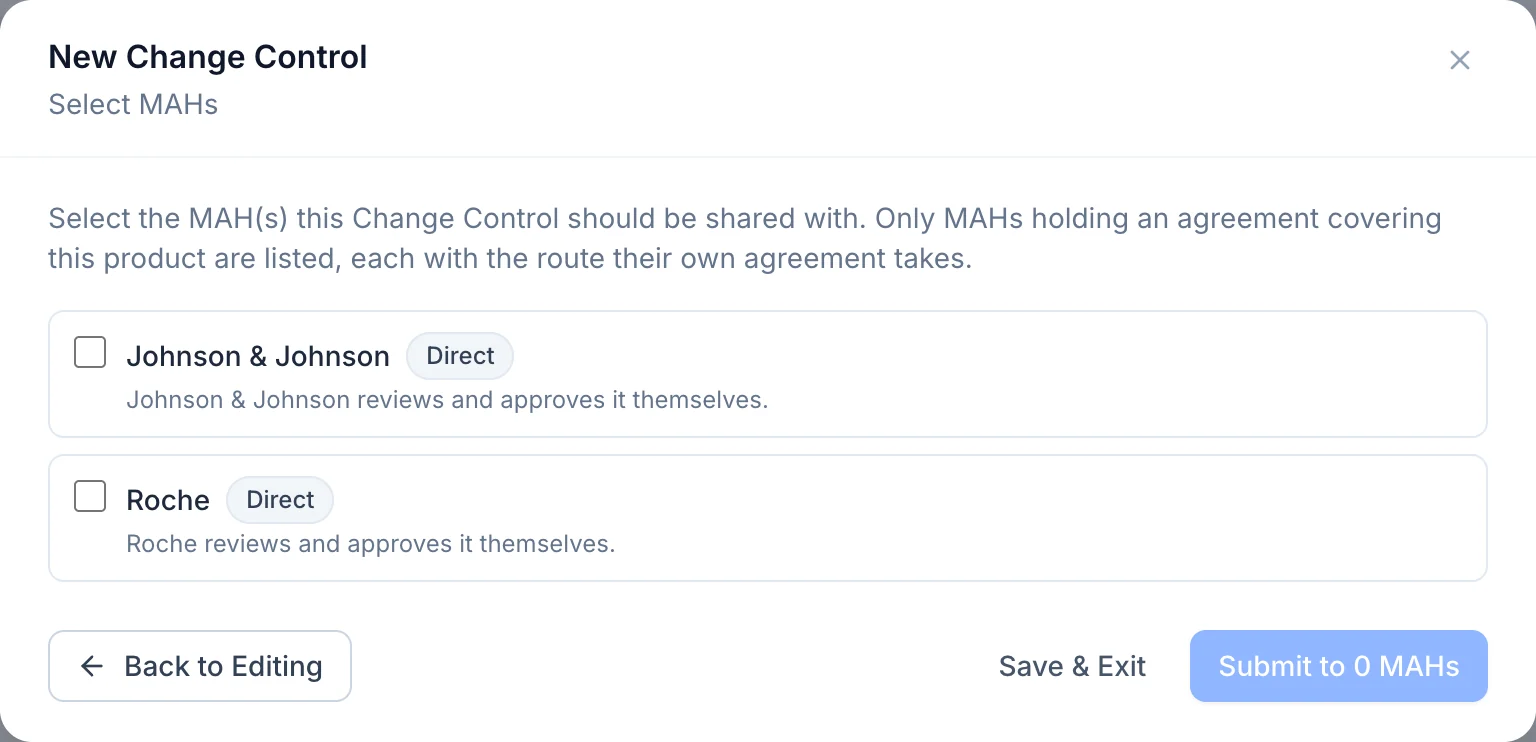
Shared with the right parties
Product entitlements, drawn from the quality agreements, decide which MAHs a change control can go to. One can be shared with several MAHs at once, each in its own thread. No MAH is told another MAH is in the workspace.
Questions kept in one place
Whoever is reviewing raises numbered questions, and whoever submitted to them answers. On a direct change control that is the MAH asking the CMO. On a B2B one the intermediary asks the CMO, and a MAH asks the intermediary — the two never deal with each other directly. Review dates can be agreed, reminders sent, and every cycle is kept in full.
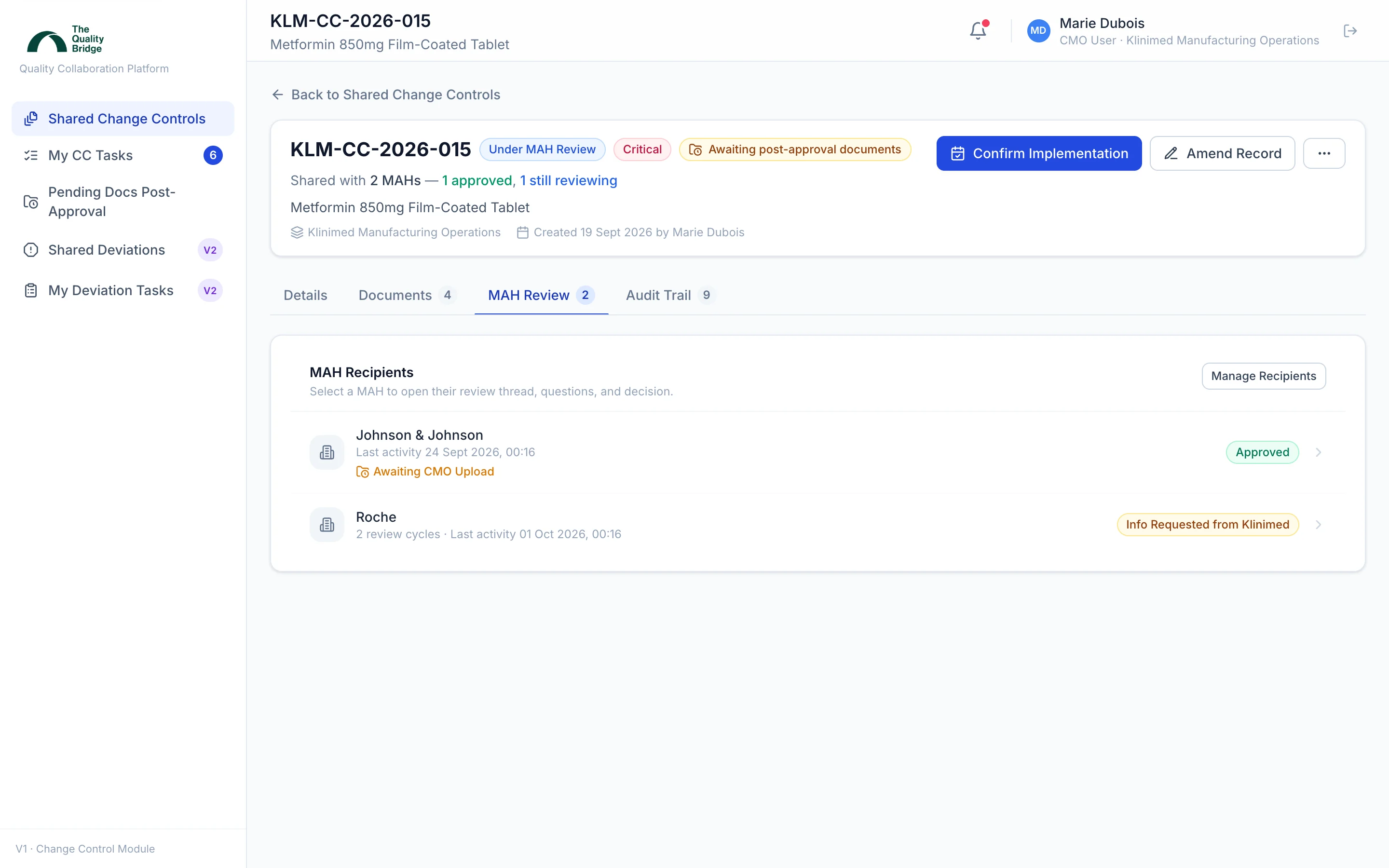
The decision
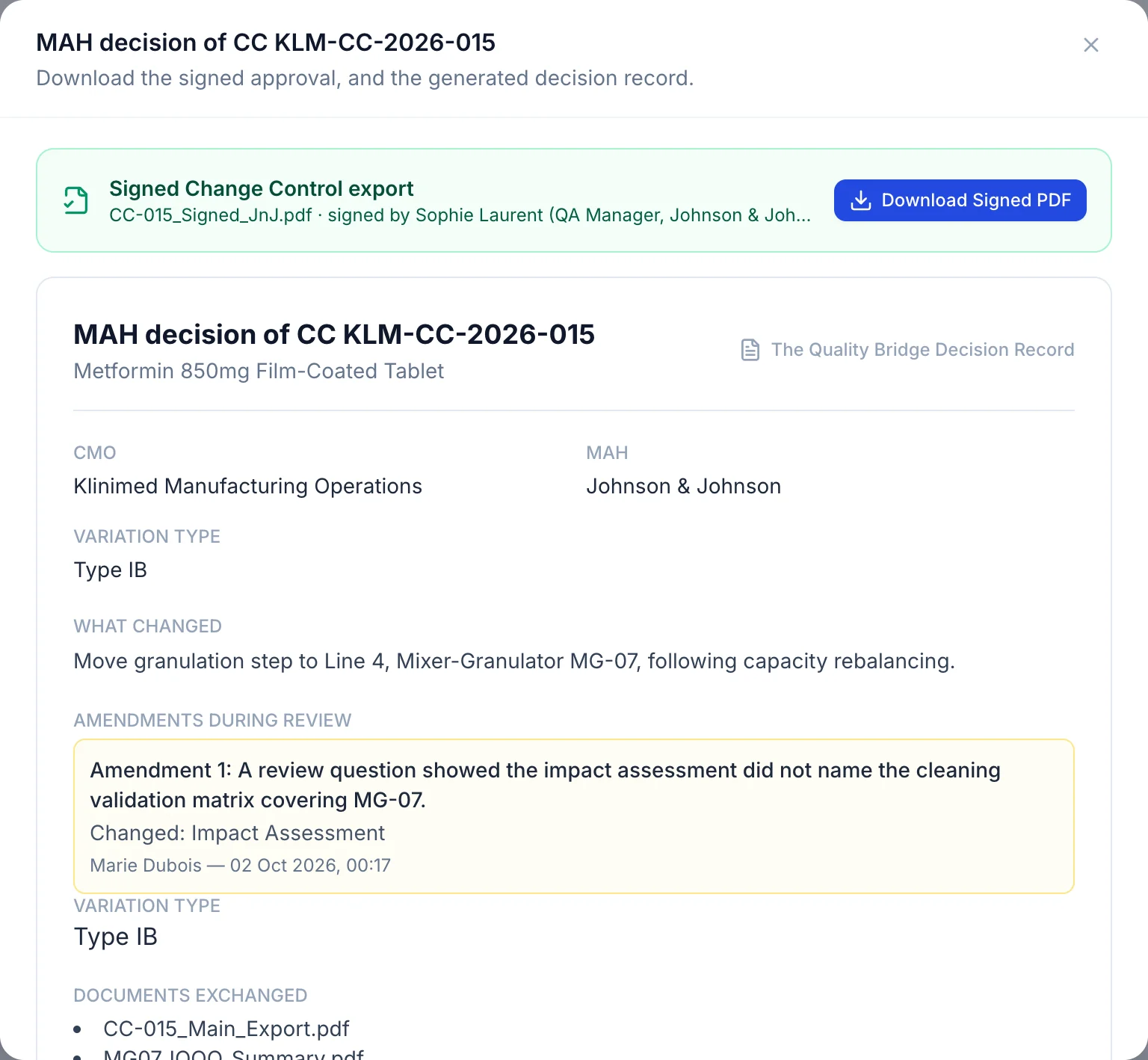
Approving means signing the CMO's own change control document, by hand or with whatever digital signature the MAH already uses, and uploading the signed copy as evidence. The platform records who decided, in what capacity, and what the decision meant. Rejection needs no signature, only a reason.
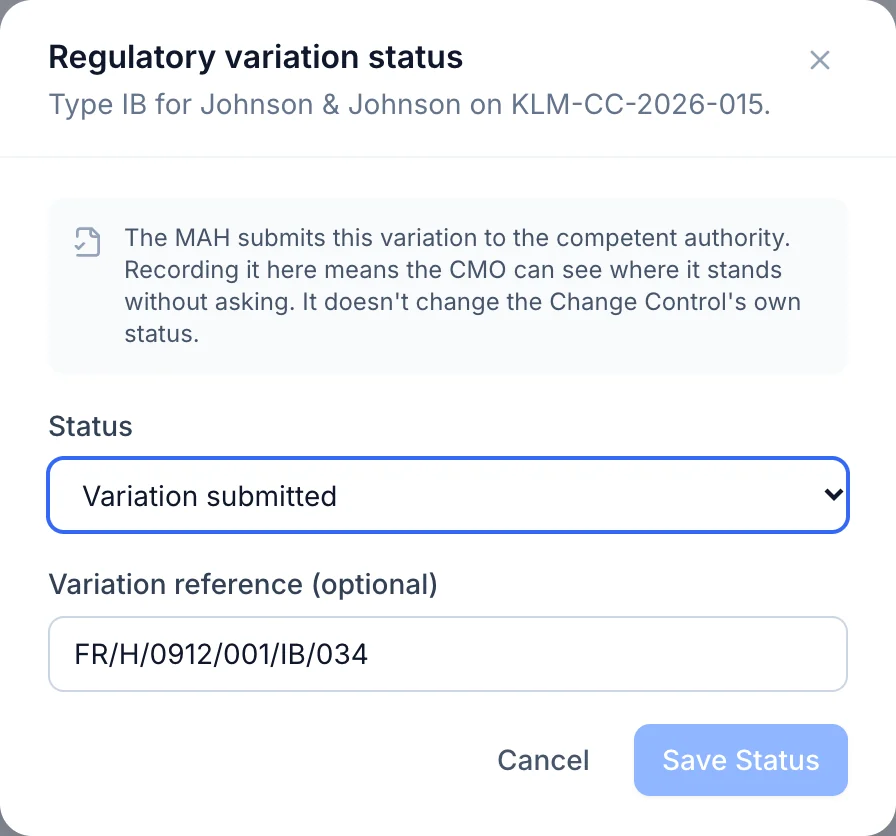
After the decision
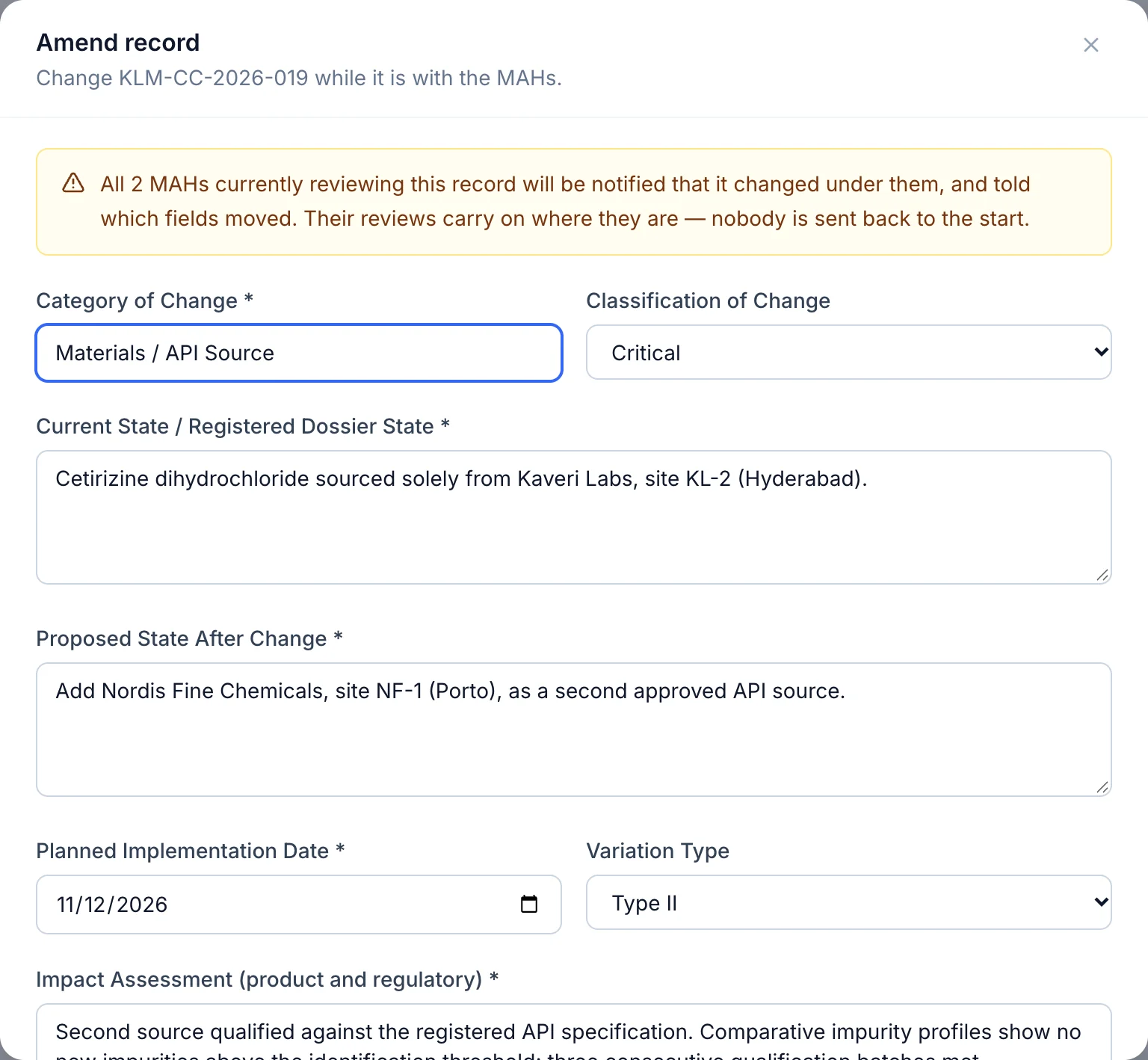
The CMO records the date the change went live. A change control can be amended only with a stated reason, and every amendment is numbered and notified. It can be withdrawn, with a reason, and its history stays.
A deviation.
Always through the intermediary
A deviation runs CMO to intermediary to MAH. The MAH never deals with the CMO directly.
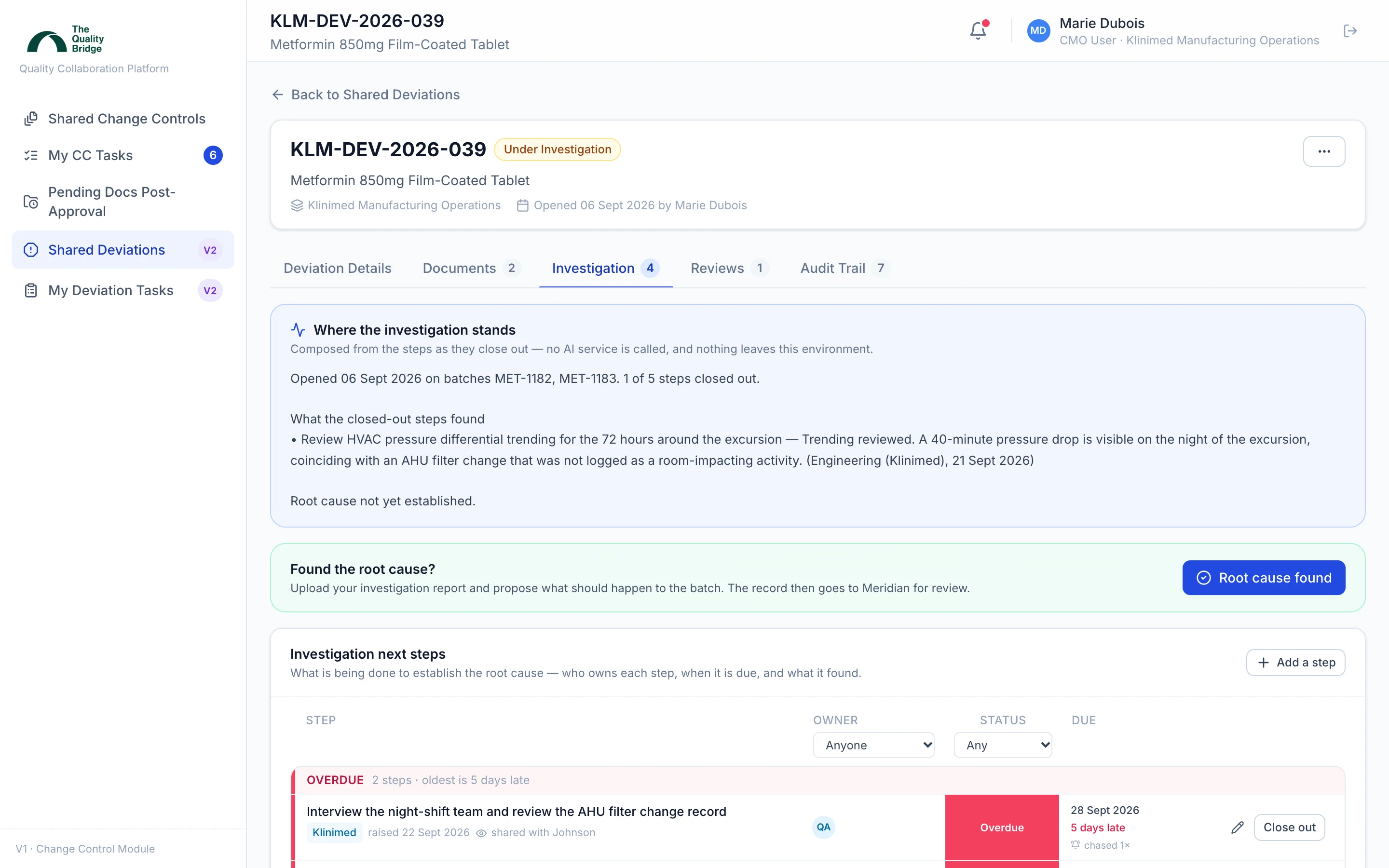
The investigation
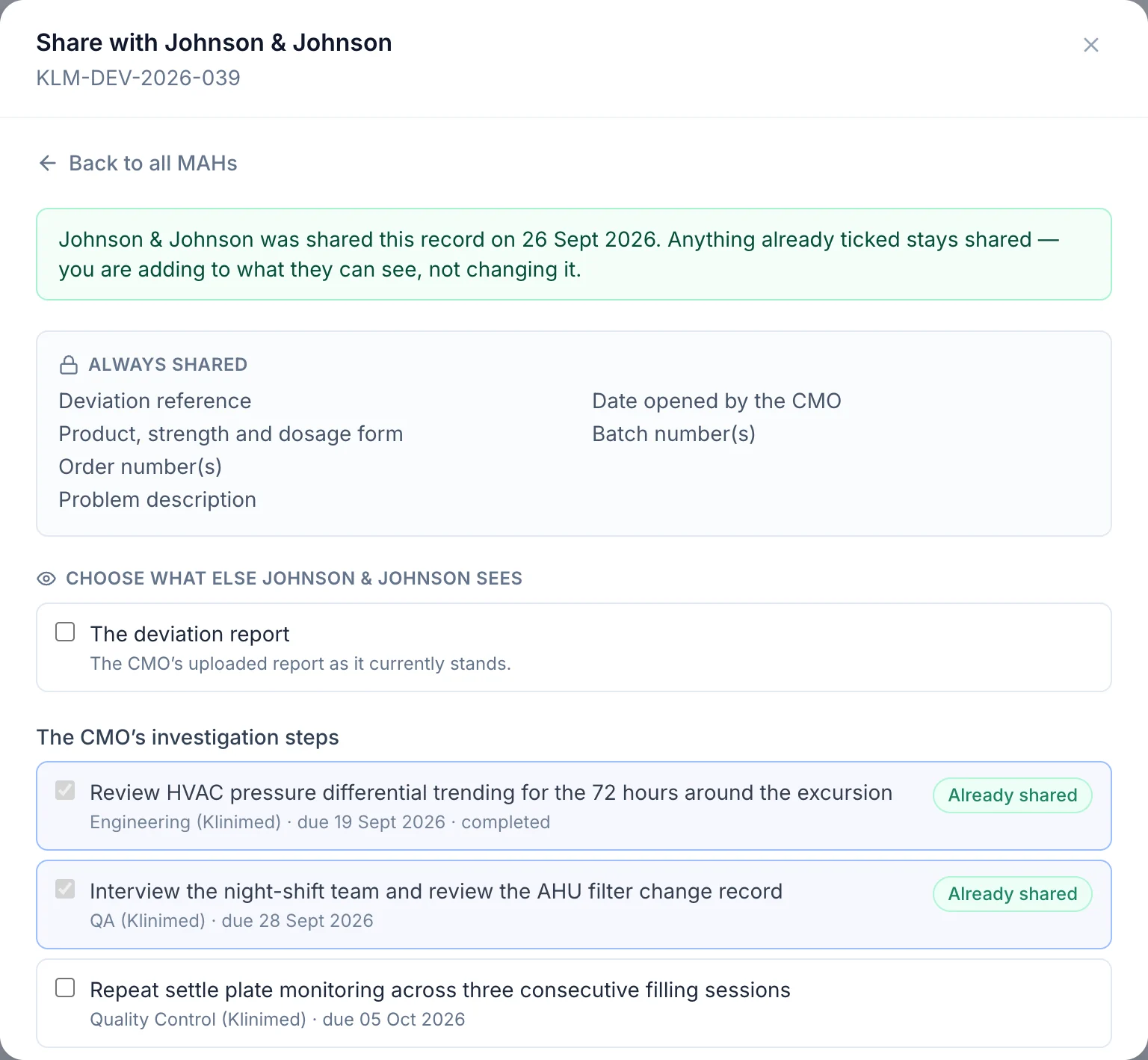
Where the root cause is not yet known, the CMO and the intermediary list what they are doing to find it, with an owner and a due date for each step. The intermediary decides, field by field, what each MAH is told, and the record shows plainly what was withheld.
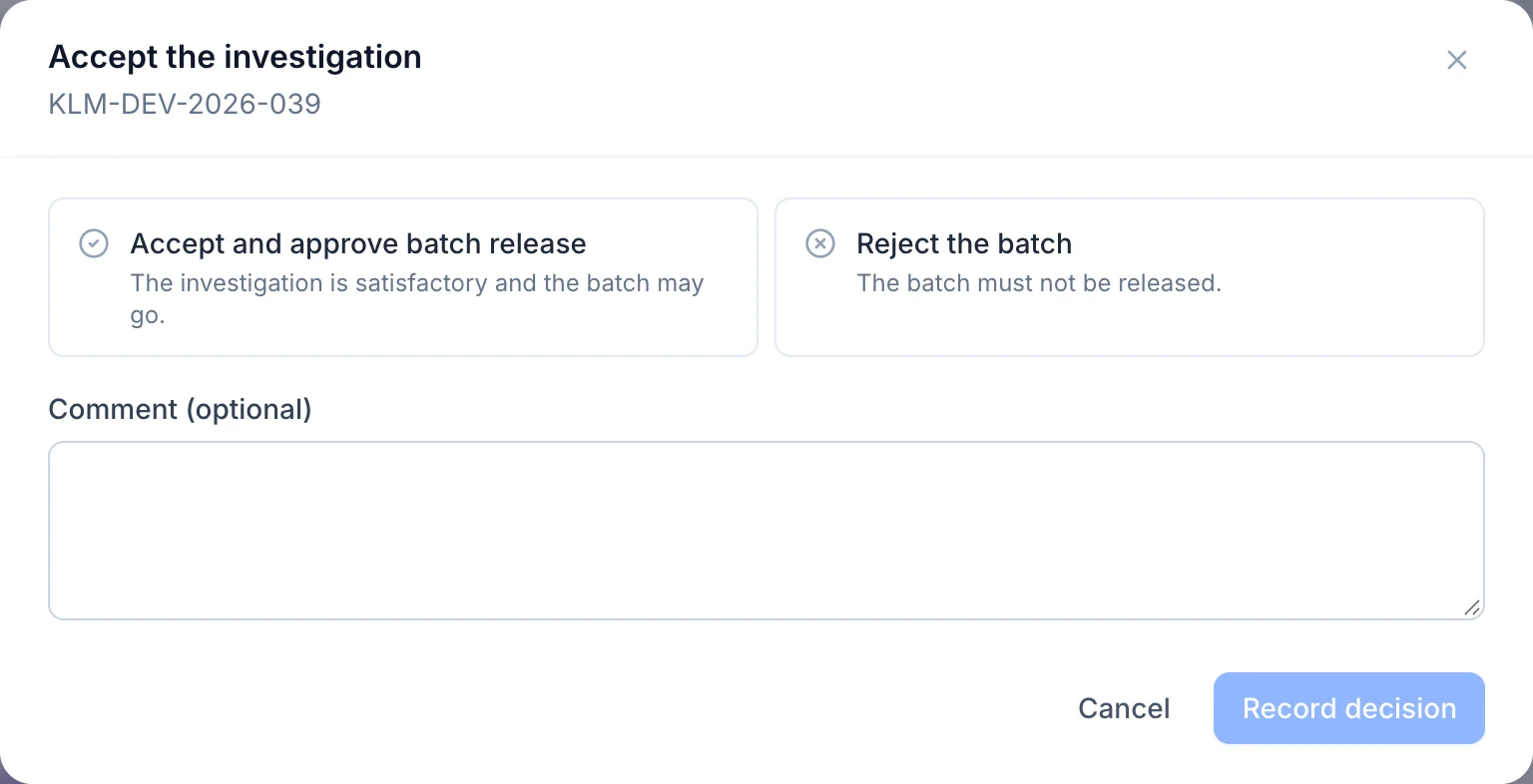
The batch decision
The MAH accepts the investigation and approves release, in full or in part, or rejects the batch with a reason. Each report revision the CMO uploads becomes the next version, so what a reviewer was looking at when they asked a question survives.
Search it, assess it, unblock it.
Search
One box searches references, products, descriptions, questions, document names and audit entries. A MAH's search never matches another MAH's thread.
Audit trail
Every action in the workspace is logged with who, what and when, and filtered per viewer.
Evidence pack
A print-ready summary of the change control, the questions and the decision, for the day an inspector asks.
Bottlenecks
For whoever holds the licence: everything that has stalled, who it is sitting with, and for how long.
What it deliberately does not do.
It is not the system of record
The regulated record stays in your QMS.
It applies no signature
The signed document is yours, produced with the signature you already use, and uploaded as evidence.
It does not replace your existing eQMS solution
They manage quality inside your company. This is the handoff between companies, which none of them was built to cover.
You are not stuck with the email chain.
Most quality teams have never seen this done any other way, so the useful half hour is not a demo — it is a walkthrough using a change control shaped like the ones you actually handle: your parties, your fields, your decision points.
30 minutes, on a callYour own change control, not a canned demoNo preparation needed